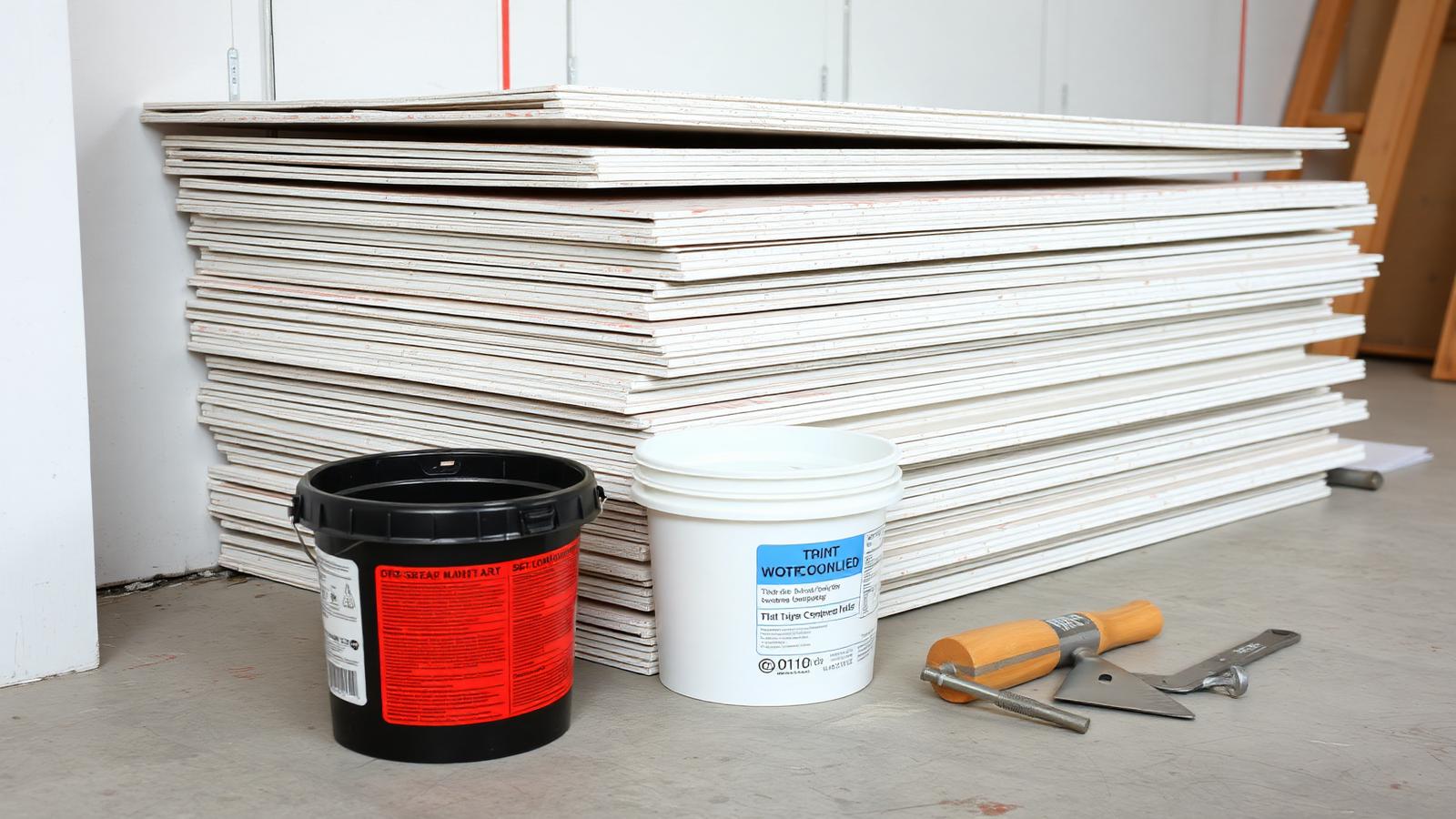
Day 1: Materials Delivery and Hang
A typical residential drywall installation begins with delivery. Sheets come in 4×8, 4×10, or 4×12 sizes — we use the largest sheets that fit through your doorways to minimize seams. After delivery, our hangers measure each wall and ceiling, cut sheets to fit, and screw them to the studs using a collated screw gun. We hang ceilings first, then walls, working from the top down. A typical 12×12 room takes a two-person crew about half a day to hang.
Day 2: Tape and First Coat
Once everything is hung, we tape every seam. Inside corners get paper tape embedded in joint compound. Flat seams between sheets get either paper or fiberglass mesh tape, depending on conditions. Screw heads get a quick dab of compound. The first coat is heavy — its job is to fill, not finish. We let it dry overnight; humidity in Wilmington often extends drying time.
Day 3: Second Coat and Sanding
The next day we apply a wider second coat over every seam and screw, feathering the edges so the joint blends smoothly into the surrounding sheet. After this coat dries, we sand lightly to knock down ridges and high spots before the final coat.
Day 4: Third Coat and Finish Sand
The third coat is the widest and lightest. We feather it 12–18 inches wide on flat seams and 6–8 inches wide on inside corners. Once it's bone dry, we do a final sanding pass with fine-grit pole sanders and dustless HEPA vacuum sanders. The goal is a perfectly flat surface with no visible seams, screw heads, or tool marks.
Day 5: Texture or Prime
Depending on what you've chosen, this day is either texture application (knockdown, orange peel) or a final skim coat for smooth Level 5 walls. Texture is sprayed on with a hopper gun, allowed to dry, and inspected. Smooth walls get one more thin skim, sanded ultra-flat, then primed.
Day 6: Inspection and Handoff
Before we declare the job complete, we run a strong flashlight along every wall and ceiling at a low angle. This is the moment of truth — raking light reveals any imperfection that normal lighting would hide. Anything that shows up gets fixed before we leave. Once the inspection passes, the room is ready for the paint crew.
What Affects Schedule
Several factors can stretch this timeline. High humidity (common in Wilmington summers) slows compound drying. Cold temperatures below 55°F also slow drying. Large rooms with many cuts (multiple windows, doors, vaulted ceilings) add hang time. Level 5 finishes add a day or two for the additional skim coat. We always quote a realistic schedule based on conditions.
How to Prepare Your Home
Before the crew arrives: move furniture out of the work area or to the center of the room, take down anything fragile on adjacent walls, plan for some dust even with dustless sanding, and confirm your HVAC will run during work. We bring all materials, tools, drop cloths, and dust containment. Call us at (910) 555-0184 to schedule a free estimate for your installation project.