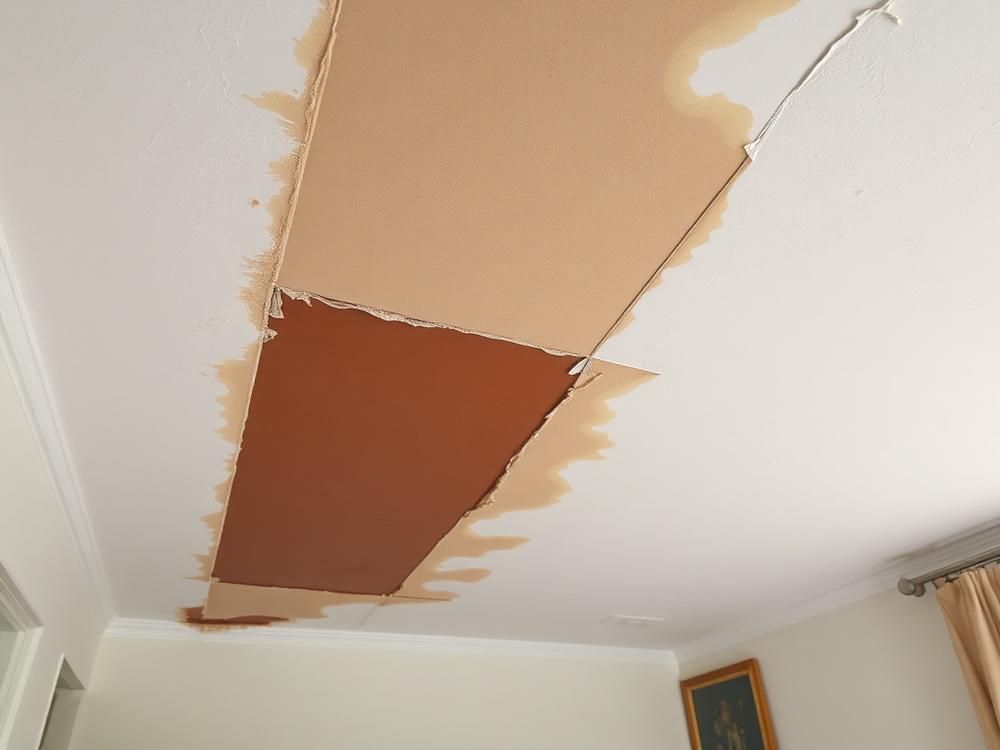
Water damage is the most underestimated drywall problem we see. A small brown ceiling stain almost always represents a much larger wet zone behind the surface. Done right, water damage repair stops the source, removes all wet material, dries the framing, treats for mold, and rebuilds with materials that resist future damage. Done wrong, it traps mold inside the wall.
How We Approach Water Damage
Every water damage job starts with finding the source. There is no point patching a ceiling if the upstairs toilet is still leaking. Once the leak is repaired (by us or by a plumber/roofer we trust), we use a moisture meter to map the wet zone, which usually extends 12–24 inches beyond the visible stain. We cut out all wet drywall plus a safety margin, treat the framing with a mold inhibitor, allow the cavity to dry completely (often with a fan for 24–48 hours), then install mold-resistant green or purple board, tape, finish, and texture match.
Hurricane and Storm Damage
Wilmington's hurricane season puts every roof, window, and door under stress. After Florence, we repaired water-damaged drywall in homes that had no visible exterior damage — wind-driven rain found tiny gaps and soaked the inside of walls. If you've had a storm event recently, even if your roof looks fine, check ceilings and the top corners of exterior walls for the slightest brown stain. The sooner we catch it, the cheaper the repair.
Insurance Claims
We document every water damage job with date-stamped photos, moisture readings, a written scope of work, and an itemized estimate formatted for insurance adjusters. We've worked with every major homeowner's insurance carrier in North Carolina and can coordinate directly with your adjuster to keep the claim moving.
What's Included
- Moisture mapping before repair
- Mold-resistant materials
- Insurance documentation
- Coordinates with roofers and plumbers
Frequently Asked Questions
Do you handle mold remediation?+
Visible surface mold on drywall less than 10 square feet, yes. Anything larger or any suspected structural mold, we refer to a licensed remediation company and rebuild after they clear the area.
Will my insurance cover water damage drywall repair?+
If the source is sudden and accidental (a burst pipe, a hurricane), most homeowner's policies cover the repair. Long-term leaks and maintenance issues are usually not covered. We provide documentation either way.
How quickly do I need to act after water damage?+
Within 48 hours is ideal. Mold can start growing in 48–72 hours on wet drywall. The longer it sits, the more material has to come out.
Can you save the drywall if it's only damp?+
Sometimes — if it dries within 24 hours and shows no swelling or staining, we may keep it in place and just monitor. Once it bubbles, sags, or stains, it has to come out.
Do you work with restoration companies?+
Yes, we partner with several Wilmington-area water mitigation companies and often follow their dry-out work with the drywall rebuild.