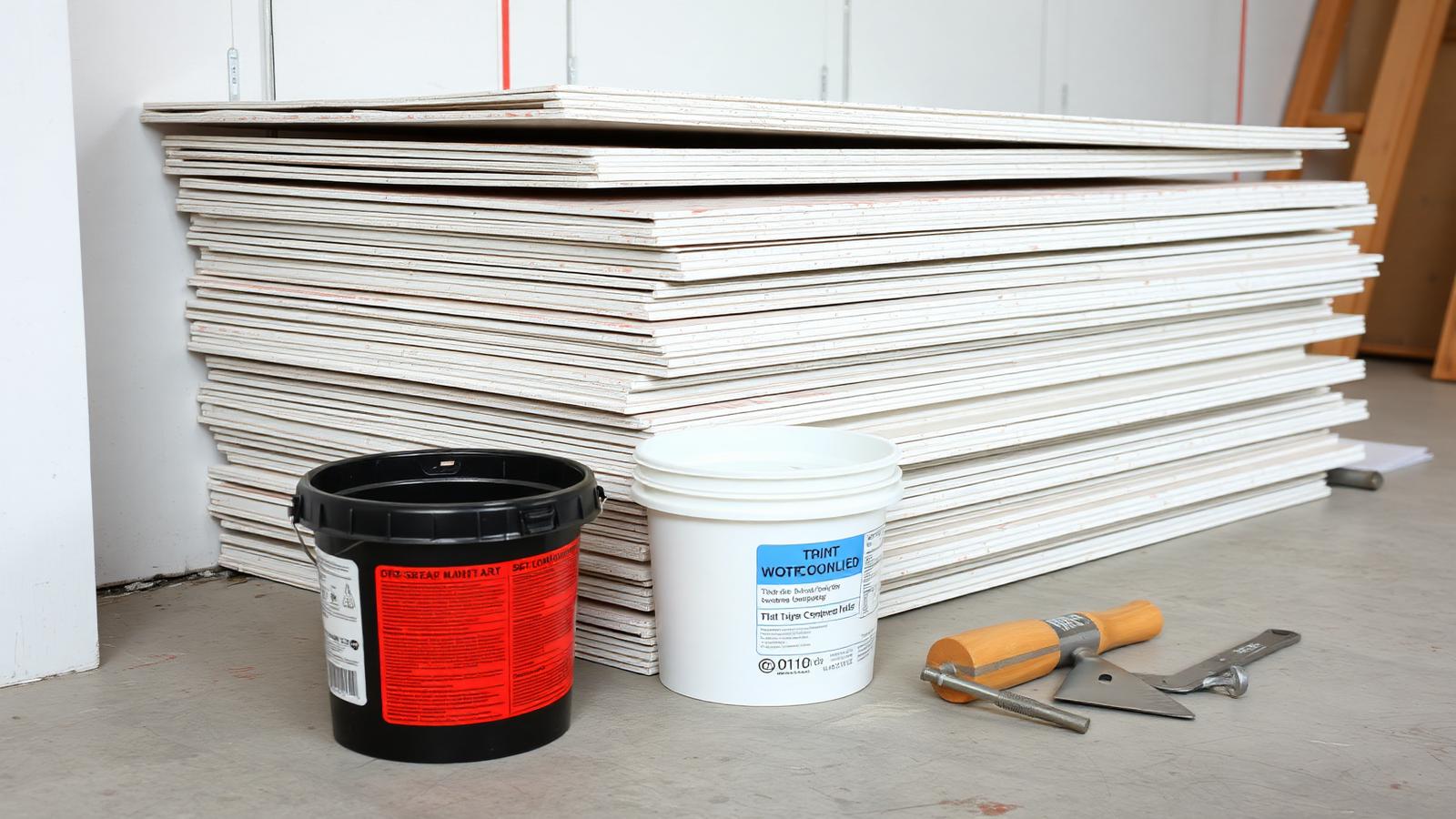
There's a meme in the home improvement world that goes: "drywall is the easiest skilled trade to do badly and the hardest skilled trade to do well." After ten years patching, repairing, and finishing drywall in Wilmington homes, I can confirm this is exactly right. Hanging a sheet of drywall is unskilled labor. Making that sheet look like it grew out of the wall is a craft that takes years.
This guide is the honest answer to "should I do this myself, or call you?" — including the jobs where we'd genuinely tell you to save your money and do it yourself.
Definitely DIY: Small Holes Under 2 Inches
If you have a nail hole, screw hole, or small dent under two inches across, this is a beginner-friendly repair. Pick up a small tub of lightweight spackle and a flexible putty knife from any hardware store. Fill the hole, let it dry, sand lightly, and touch up with paint. Total cost: under fifteen dollars. Total time: ten minutes plus paint drying.
Don't overthink it. The biggest mistake people make on small holes is using too much spackle and creating a bump that's harder to hide than the original hole. Less is more — apply thin, scrape flush, sand barely at all.
DIY-Friendly with Patience: Holes Up to 6 Inches
Doorknob-sized holes are within reach of a careful DIY-er, but they require a real patch — not just compound shoved into the hole. The two common approaches are the "California patch" (a piece of drywall with the paper face peeled back to create flaps) and the "screw-and-block" method (a wood backing block screwed behind the hole, then a drywall plug screwed to the block).
Both work. The hard part is the finishing: you need to apply three feathered coats of joint compound, sand between coats, and blend the edges out far enough that the repair disappears under paint. If you're working in a high-visibility room with good lighting, you'll see your patch from across the room forever unless you take your time.
If the room has texture, add another layer of difficulty — you'll need to match it, either with a spray can of patch texture or by hand with a sponge or trowel.
Honest take: A patient DIY-er can absolutely nail this in an out-of-the-way bedroom. In a great room with floor-to-ceiling windows, hire a pro.
Borderline: Settlement Cracks
Hairline settlement cracks above doors and windows are technically a beginner repair, but doing them correctly requires understanding that the crack will reopen unless you reinforce it with tape. Many DIY guides skip this step, which is why so many settlement crack repairs fail within a year.
If you're willing to use mesh tape and three coats of compound, this is doable. If you're going to just smear spackle into the crack, save yourself the wasted effort and call us — or accept that you'll be redoing it annually.
Strongly Recommend a Pro: Water Damage
Water damage looks like a small brown stain on the ceiling. The reality is almost always worse than it looks. Drywall wicks water sideways through capillary action, so the wet zone often extends 12 to 24 inches beyond the visible stain. The paper face may be intact while the gypsum core behind it has crumbled. Mold may be growing on the back side that you can't see.
Properly fixing water damage requires identifying and stopping the source (a roof leak, plumbing leak, or condensation issue), removing all wet material plus a safety margin, drying the framing, treating for mold, and rebuilding with moisture-resistant materials. A DIY repair that doesn't address the source or the hidden moisture will fail — usually with mold growing inside the wall.
This is not the place to save money. Call a pro, and if there's mold involved, call a remediation company first.
Strongly Recommend a Pro: Anything on a Ceiling
Ceiling drywall work is two to three times harder than wall work. Gravity is fighting you, lighting is brutal (every imperfection casts a shadow), and texture matching on ceilings is unforgiving because the eye sweeps across the whole plane at once.
Even experienced DIY-ers who can patch walls invisibly will struggle to make a ceiling repair vanish. Add in the physical difficulty of working overhead with heavy joint compound, and the math almost always favors hiring a pro.
Strongly Recommend a Pro: Texture Matching
This is where amateur jobs become obvious. Wilmington homes have a mix of knockdown, orange peel, popcorn, smooth, and skip-trowel textures, and matching any of them requires both the right tools (hopper gun, knockdown knife, sponges, trowels) and the practiced hand to use them.
A patch that's perfectly flat but the wrong texture is more visible than no patch at all. You'd be better off leaving the hole.
If you absolutely want to DIY a textured repair, the only realistic path is buying a spray can of premixed texture from a hardware store and testing it on a scrap piece of cardboard until you can match the wall. Even then, expect to repaint the entire wall corner-to-corner, because the patch will catch light differently than the surrounding area.
Strongly Recommend a Pro: Large Areas or Whole Rooms
Hanging and finishing a single sheet of drywall is doable for a determined DIY-er. Hanging and finishing an entire room, basement, or addition is several days of brutal work with a steep learning curve. Professional crews finish a full room in the time it takes a homeowner to hang the first wall.
Beyond labor, there are tools you don't own and don't want to buy: a drywall lift, a banjo or automatic taper, a stilts setup for ceilings, a dustless sanding vacuum. Renting these starts to approach the cost of hiring a pro who already owns them and uses them daily.
Strongly Recommend a Pro: Anything Involving Code
Drywall in a garage that shares a wall with the living space must be 5/8 inch fire-rated, taped and finished to code. Drywall in a bathroom needs to be moisture-resistant. Drywall over a furnace closet, around a fireplace, or in a rental property may have code requirements you're not aware of. Failing a code inspection because of DIY drywall is an expensive lesson.
The Honest Conclusion
DIY drywall repair makes sense for small holes in low-visibility areas where the texture is forgiving and the room won't be photographed for resale. For everything else — water damage, ceilings, textures, whole rooms, code work — hiring a pro is faster, cleaner, and almost always cheaper in total cost when you factor in your time and the cost of re-doing failed DIY.
If you're not sure which category your project falls in, give us a call. We do free estimates throughout Wilmington and surrounding areas, and we'll tell you honestly whether your project is worth our visit or whether you can knock it out with $20 of supplies.
Call Wilmington Drywall Pros at (910) 555-0184. We've never lost a customer by being honest, and we've gained plenty.